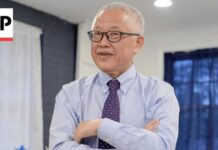
As world leaders race to control artificial intelligence, China’s Xi Jinping just warned that letting one country dominate this technology could create “new historical injustices” that hurt ordinary people everywhere.
Story Snapshot
- China’s President Xi Jinping says AI must not be a “solo performance” by one country, but a global cooperative effort.
- Xi calls artificial intelligence a global public good and pledges training and support for developing nations.
- His remarks challenge United States tech dominance and highlight growing rivalry over who sets AI rules.
- The fight over AI control could deepen the power of global elites while leaving everyday citizens with little voice.
Xi’s message: AI cannot be owned by one country
Speaking at the World Artificial Intelligence Conference in Shanghai, President Xi Jinping told leaders and tech executives that the development of artificial intelligence “should not be a solo performance by a single country, but a symphony of international cooperation.” He warned that if one nation controls the most powerful AI systems, it could create “new historical injustices,” widening the gap between rich and poor countries and between global elites and regular people.
Xi framed artificial intelligence as an “international public good that benefits humanity,” a term he and other Chinese officials have used before when talking about global technology. Calling AI a public good sounds simple, but it means he wants rules and resources shared across borders, at least on paper. That message speaks to a rising worry on both the left and the right: that a few powerful governments and tech giants will lock up AI for their own gain while everyone else lives with the risks.
China’s pitch to the Global South and a new AI order
Xi’s speech also pushed a clear political goal: casting China as leader of a new global AI order, especially for developing countries. He promised thousands of AI training slots and new cooperation centers with groups such as the BRICS bloc and other partners, saying China would help the Global South build its own AI capacity instead of staying dependent on Western technology. For many nations that feel shut out by United States export controls and Western companies, that offer could be hard to ignore.
At the conference, officials from 29 countries backed a new China-led body to promote global AI cooperation, signaling that Beijing’s pitch is gaining real support outside the West. Chinese diplomats have repeated the line that AI “should not be owned by major countries, still less dominated by contest and rivalry,” arguing for an open and “non-discriminatory” environment for AI development. That sounds attractive to citizens across the political spectrum who are tired of great-power games, yet it also raises questions about whether this new body would truly share power or simply shift it toward a different set of elites.
Behind the rhetoric: rivalry with the United States and fears of elite control
Xi’s call for cooperation comes at the same time he pushes hard for China’s own self-sufficiency in chips, software, and core AI tools. In earlier internal meetings, he told top officials that China must “occupy the high ground” in critical AI technologies and hold them “firmly in our own hands.” That mix of global public-good language and national-tech ambition shows the real picture: this is both a moral appeal and a power play in a deepening contest with the United States.
For Americans who already feel the federal government serves wealthy insiders first, Xi’s speech is a reminder that foreign leaders talk about “fairness” and “global public goods” while also chasing control over world-shaping tools. United Nations debates on AI governance already show that big powers, including China, often drive the agenda, even when they speak about inclusion and closing the “digital divide.” Whether rules are written in Washington, Beijing, or a new global agency, there is a real risk that everyday workers, small business owners, and families end up watching from the sidelines while elites decide how AI changes jobs, privacy, and security.
Shared worries across left and right: who sets the AI rules?
Research on AI diplomacy warns that when a few advanced states run ahead on powerful models, they gain huge leverage over information, surveillance, and economic power. This can deepen mistrust between nations and also between citizens and their own governments, especially if AI tools are used to track people, shape public opinion, or automate decisions with little transparency. Xi’s demand that AI stay “under human control” speaks to real safety concerns, but it raises a hard question: which humans, and who keeps them in check?
Twenty-nine countries, including Russia, Brazil, Pakistan, and Indonesia, signed on to Beijing's new World AI Cooperation Organization in Shanghai this week, with the UN Secretary-General in attendance. Xi Jinping opened China's flagship AI summit in person today for the first…
— After the Update (@KumpJohn42217) July 17, 2026
Many conservatives worry that global bodies will push top-down rules that weaken national sovereignty, while many liberals fear that unregulated AI will widen inequality and allow powerful actors to manipulate markets and voters. Xi’s speech shows that the struggle over AI is not just a tech story; it is a fight over who writes the code of the future and whose values guide it. Whether led by the United States, China, or a new alliance, any system that leaves ordinary citizens out of the conversation risks repeating the same pattern both sides already hate: a world run by distant elites, using new tools to protect their old power.
Sources:
insiderpaper.com, singjupost.com, reuters.com, wtvbam.com, scmp.com, youtube.com, mfa.gov.cn, carnegieendowment.org, research-archive.org, thesis.unipd.it
© rightwardpress.com 2026. All rights reserved.