When a sitting president uses his power to threaten TV networks for not airing his speech, it spotlights how both government and media can seem rigged against ordinary Americans.
Story Snapshot
- President Trump blasted ABC and NBC for not airing his primetime election speech live and said they should lose their licenses.
- The speech doubled as a pressure campaign, tying “unfair” coverage and alleged election fraud to calls for Federal Communications Commission (FCC) punishment.
- Legal experts say U.S. law and the First Amendment make it nearly impossible to yank licenses over news content, despite Trump’s repeated threats.
- The clash feeds a wider distrust of both media and government, as many Americans see elites on all sides protecting their own power.
Trump turns a primetime speech into a fight with TV networks
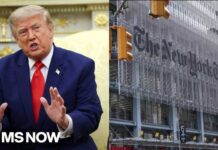
During a nationally televised address on election security, President Donald Trump used part of his speech to attack ABC and NBC for refusing to air it live on their main broadcast channels. He claimed the networks “knew what it was about” and skipped it “because they don’t like the topic” and “know how corrupt our system is,” tying their programming decision to a supposed effort to hide election fraud. Trump then said “fraud like this should mean a revocation of their licenses,” directly urging the Federal Communications Commission to punish the networks.
ABC and NBC were not alone in making a different choice from the White House’s wishes. CBS and Fox did carry the address live, while other outlets relied on clips and fact-checks rather than full wall-to-wall coverage. News executives have made similar calls in the past under both Republican and Democratic presidents, sometimes choosing not to interrupt primetime entertainment for partisan or repeat speeches that are not official State of the Union addresses. Trump framed this routine editorial judgment as proof that major media are “against” him and act like “an arm of the Democratic Party,” repeating his long-running “fake news” message.
License threats are part of a broader pattern, not a one-off outburst
Trump’s anger at ABC and NBC did not come out of nowhere; it fits years of threats to strip broadcasters of their right to use public airwaves when they criticize him. He has said coverage of him is “97% negative” and argued that networks that are “almost 100% negative” should have their licenses “terminated,” casting tough reporting as partisan punishment of conservatives. He previously told Reuters that ABC affiliates should have their licenses “revoked” after a reporter asked about Jeffrey Epstein, saying their news was “extremely misleading and inaccurate,” and made similar suggestions about NBC after reports he disliked. These attacks are often paired with claims that broadcasters pay “absolutely no money” for “multi-billion-dollar” airwaves and therefore can be easily punished.
Trump’s allies have echoed and amplified the campaign. Federal Communications Commission Chair Brendan Carr, a close Trump supporter, has publicly warned broadcasters that their licenses could be at risk over what he calls “hoaxes” or “news distortions,” including coverage of the war with Iran that the administration views as too negative. The FCC is already challenging multiple licenses held by ABC stations, a move widely seen in the industry as connected to Trump’s pressure and his push to force out late-night host Jimmy Kimmel. Advocacy groups that track threats to free speech say these steps are textbook “viewpoint discrimination,” where government power is used to punish media for not supporting the official line.
What the law says — and why both sides still feel cheated
Despite the tough rhetoric, Trump cannot simply flip a switch and take ABC or NBC off the air. Under federal communications law and the First Amendment, the Federal Communications Commission does not have authority to revoke a station’s license just because politicians dislike a particular newscast or speech. Legal analysts explain that broadcast licenses are held by local stations, not networks, and can be challenged only through formal hearings focused on technical rules or whether a station serves “the public interest,” a very high bar. Past FCC leaders from both parties have said plainly that they “do not and will not” pull licenses simply over content or coverage that offends elected officials.
Even with those limits, this showdown deepens a feeling shared by many on the right and left: powerful institutions look out for themselves first. Conservatives frustrated by years of “woke” culture, globalism, and slanted coverage see big media companies as liberal fortresses that mock their values while cashing in on outrage. Liberals angry about “America First” policies, cuts to social programs, and harsh treatment of immigrants see Trump’s license threats as another step toward silencing dissent and shielding the rich and connected. Both camps watch the same fight and see elites — in government and media — trying to control what the public is allowed to hear.
Why this clash matters for everyday Americans
For citizens already struggling with rising prices, shaky jobs, and a government that rarely seems to solve problems, this battle is more proof that the system feels broken. When a president uses a national speech to pressure regulators to punish critical coverage, it raises alarms about political power leaning on independent watchdogs. When major networks decide not to air a presidential address live, many viewers wonder whether gatekeepers are hiding information or simply protecting their own brands. Both choices feed the belief that a “deep state” of insiders — in Washington and in boardrooms — is fighting over control while the public is left in the dark.
There is also a deeper risk to core American values. The country was built on the idea that government cannot control the press and that citizens judge leaders for themselves. Trump’s calls to “terminate” licenses over negative coverage push hard against that tradition, even if the law blocks actual shutdowns. At the same time, if media companies are seen as too cozy with political or corporate elites, their defense of “press freedom” may sound hollow to millions who no longer trust them. That growing gap in trust, not any single speech, could be the lasting damage from this latest clash between the White House and the networks.
Sources:
mediaite.com, reuters.com, theguardian.com, npr.org, cnbc.com, politicalwire.com, nbcnews.com, time.com, youtube.com, nytimes.com, politico.com, thehill.com, internazionale.it, thedailybeast.com, facebook.com, pbs.org, cnn.com, insidesources.com, bbc.com, article19.org, usatoday.com, connecthearing.com, en.wikipedia.org
© rightwardpress.com 2026. All rights reserved.