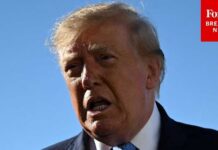
As President Trump resumes large-scale airstrikes on Iran over the Strait of Hormuz, many Americans see another distant war risking U.S. lives, oil prices, and civil liberties while the “deal” Washington promised seems to keep breaking down.
Story Snapshot
- U.S. forces are striking dozens of Iranian targets after attacks on commercial ships in the Strait of Hormuz.
- Trump says Iran has broken a ceasefire deal many times and declares the truce “over,” reigniting the war.
- Iran calls the new U.S. strikes a violation of the memorandum of understanding and the United Nations Charter.
- Escalation in the strait threatens global oil supplies and deepens public distrust in the U.S. government’s war strategy.
Trump resumes strikes after ship attacks and claims Iran broke the deal
U.S. Central Command said American forces launched powerful new strikes against Iran after three commercial vessels were attacked while passing through the Strait of Hormuz. The military reported hitting more than 80 targets, including air defense systems, command networks, and anti-ship missile sites along Iran’s southern coast. President Donald Trump followed that announcement by declaring the Iran ceasefire “over” and accusing Tehran of breaking their deal “probably 10 times,” framing the air campaign as punishment for Iran’s actions and a warning against future ship attacks.
Coverage from major outlets shows this is not an isolated episode but part of a pattern of traded strikes. Earlier rounds of bombing in July hit about 80 Iranian targets, including dozens of small boats used by Iran’s Islamic Revolutionary Guard Corps, after Tehran allegedly attacked three commercial ships in the same waterway. The U.S. message has been consistent: every strike is presented as a “defensive” action to protect shipping and force Iran back to terms that reopen the strait, even as the cycle of attack and retaliation keeps expanding.
Iran calls U.S. strikes illegal and says Washington broke the memorandum
Iran’s leaders tell a very different story. After the latest coastal strikes, the Iranian Foreign Ministry condemned the attacks as “barbaric” and a violation of international law and the war-ending memorandum of understanding signed in mid‑June. Officials in Tehran say the U.S. bombed monitoring and coastal surveillance sites, not just weapons depots, and insist they have the right to defend their territory from what they describe as foreign aggression. Iranian statements also cast the U.S. as the party that first broke the deal, arguing that Washington used the ceasefire to prepare new operations instead of moving seriously toward peace.
Iran further claims that its own missile and drone launches against U.S.-linked targets in Kuwait and Bahrain were lawful retaliation for those coastal strikes. Gulf governments, however, report intercepting many of these missiles and describe them as hostile attacks that risked hitting regional bases and energy facilities. This clash of narratives—America saying it is defending trade routes, Iran saying it is defending sovereignty—leaves ordinary people in both countries watching leaders trade legal claims while bombs and missiles cross borders in real time.
Strait of Hormuz fights show a larger pattern of endless, unclear wars
The Strait of Hormuz has become the center of a war that many Americans now see as both dangerous and confusing. Analysts note that small, hard‑to‑prove incidents at sea—like drone strikes or mined ships—often trigger large waves of attacks from both sides, with each government blaming the other and little independent proof shared with the public. Earlier this year, U.S. and Israeli operations to force open the strait after Iran tried to close it already showed how quickly a narrow shipping dispute can grow into a regional conflict touching Jordan, Kuwait, Bahrain, and Israel.
For Americans on the right, the promise of “America First” meant fewer open‑ended foreign wars and more focus on fixing problems at home. For Americans on the left, it meant at least some shift away from constant military solutions and toward diplomacy and economic fairness. Instead, many now see Washington once again launching air campaigns, talking about seizing oil hubs like Kharg Island, and threatening civilian infrastructure inside Iran. These moves reinforce a shared fear that powerful figures in both parties treat war as a default tool, even when past promises were to limit it.
Oil, prices, and distrust: why this matters far beyond the Gulf
Fights over the Strait of Hormuz are not just about ships and missiles; they are about energy and money for millions of families. This narrow waterway carries a large share of the world’s oil exports, and earlier Iranian steps to close or threaten the strait already helped push global prices higher. Each new round of strikes that targets Iranian naval and missile forces is explained as a way to protect that flow, but in practice every escalation risks wider disruption, bigger price spikes, and more strain on household budgets already hit by inflation and past policy failures.
US launches third night of airstrikes on Iran. Explosions heard in Bandar Abbas. CENTCOM confirms strikes targeting Iranian forces. Trump directs continued military pressure.#USIranWar #BandarAbbas #CENTCOM #IranStrikes #StraitOfHormuz #DailyEveningNews pic.twitter.com/7OIhqO6JdV
— Daily Evening news (@d_evening_news) July 14, 2026
With U.S. warplanes flying repeated missions, many citizens see a familiar pattern: leaders argue over legal details and deals, but regular people pay the cost through higher energy bills, unstable markets, and the risk that another regional conflict could pull in American troops for years. Trump’s warning that the United States might strike Iran’s civilian infrastructure or seize key oil facilities if talks fail only deepens concern that the federal government is again reaching for blunt power overseas while struggling to solve deep problems at home. For conservatives and liberals alike, the latest Iran strikes feel less like clear self‑defense and more like one more sign that a distant “deep state” keeps choosing war, debt, and global tension over the everyday needs of the American public.
Sources:
cbc.ca, rferl.org, voz.us, news.sbs.co.kr, apnews.com, reuters.com, criticalthreats.org, aljazeera.com, indiatoday.in
© rightwardpress.com 2026. All rights reserved.