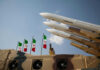
(RightWardpress.com) – Trump’s promise to keep striking Iran “until all objectives are achieved” is colliding head-on with the Constitution’s war-powers debate at home—and the risk of a wider regional war abroad.
Quick Take
- President Trump says U.S. combat operations against Iran will continue “unabated” until mission objectives are met, even as end conditions remain publicly undefined.
- Operation Epic Fury escalated U.S.-Iran conflict dramatically, including strikes that killed Iran’s Supreme Leader Ayatollah Ali Khamenei.
- Iran retaliated with attacks on Israel and the Gulf region; three U.S. service members were killed and five were seriously wounded, according to reporting.
- Democratic lawmakers are challenging the “imminent threat” rationale and pushing for clearer objectives and congressional authorization.
Trump Signals Sustained Campaign With Unclear Public End State
President Donald Trump said the U.S. military campaign against Iran will continue “unabated” until all objectives are achieved, following the launch of Operation Epic Fury on March 1, 2026. The administration’s public messaging frames the strikes as necessary to eliminate an “imminent” danger tied to Iran’s nuclear ambitions, ballistic missile development, and support for terrorist proxies. Trump has not publicly detailed measurable end conditions, leaving Americans to parse broad objectives rather than a defined timetable.
The operation represents a major escalation in modern U.S.-Iran confrontation, including daylight strikes that killed Supreme Leader Ayatollah Ali Khamenei. The U.S. previously conducted a summer 2025 bombing campaign against Iranian nuclear facilities and warned Iran against resuming any nuclear weapons pursuit. Subsequent U.S. intelligence assessments cited in reporting indicated Iran attempted to rebuild parts of its nuclear program and continue work on long-range missiles, driving the administration’s claim that the threat persisted.
Retaliation Hits Allies—and U.S. Forces Pay a Price
Iran responded after the initial U.S. strikes with retaliatory attacks on Israel and the wider Gulf region, increasing the likelihood that the conflict spreads beyond direct U.S.-Iran exchanges. The human cost has already reached American families: three U.S. service personnel were reported killed and five seriously wounded in Iranian attacks, intensifying scrutiny on the strategy and the risks to deployed forces. Those casualties also sharpen the urgency of congressional oversight and clear mission definition.
For conservatives who watched prior administrations drift into prolonged Middle East engagements without clarity, the key question is whether the stated objectives are limited and achievable—or whether they expand under battlefield pressure. The available public information emphasizes multiple aims: degrading Iran’s nuclear capability, hitting ballistic missile arsenals, disrupting proxy networks, and damaging naval forces. That breadth may be militarily coherent, but it also makes it harder for the public to judge progress without transparent benchmarks.
Congressional Pushback Revives the War-Powers Fight
Democratic leaders argue the administration must explain itself to the American people and Congress, provide a firm justification for initiating major hostilities, define the national security objective, and outline a plan to avoid a prolonged quagmire. Several lawmakers with access to sensitive briefings have questioned whether the intelligence supports the label “imminent” in the legal and constitutional sense. The timing and shape of any War Powers measures remain unclear, but the dispute is now central to the political story.
Republican backers point to decades of Iranian aggression and highlight that the administration says it pursued extensive diplomacy and set clear red lines before launching strikes. The White House narrative fits a “peace through strength” framework: deterrence through decisive action against nuclear development and proxy warfare. At the same time, the constitutional tension is real: sustained combat operations without explicit congressional authorization raises predictable separation-of-powers concerns, regardless of who occupies the Oval Office.
What “Imminent” Means—and What Comes Next
Expert commentary in reporting suggests that “imminent” cannot be assessed solely by counting centrifuges or missiles; it also depends on Iran’s demonstrated intent and capacity to harm the U.S. and allies. That framing matters because Iran’s support for Hamas and other proxies has been cited as evidence of capability and willingness to trigger regional violence. One assessment also suggests Iran’s post-Khamenei leadership could choose negotiation rather than continued escalation, given U.S.-Israeli military superiority and limited external backing.
For Americans focused on constitutional governance, the unresolved issue is the precedent being set: how far a president can go in a sustained campaign absent a formal vote, and how Congress responds when briefed after the fact. For Americans focused on security, the practical test is whether the campaign reduces the nuclear and missile threat while protecting U.S. troops and allies from retaliation. With objectives still broadly defined in public, the next congressional briefings and battlefield developments will shape whether this stays limited—or expands.
Sources:
Copyright 2026, RightWardpress.com