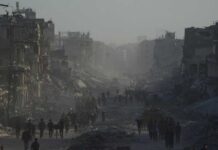
As tens of thousands of mostly young men flooded into Ceuta in just two days, almost no women followed them into a territory that had no plan to feed, house, or keep them safe.
Story Snapshot
- About 50,000 to 60,000 people, mainly young Moroccan men, crossed into Ceuta in a sudden mass surge.
- Local authorities admitted they had no system in place to feed or shelter those who stayed, leaving many hungry and exposed.
- Spain and Morocco quickly focused on pushing people back or getting them to return, and almost all did so within days.
- The crisis highlights a harsh truth many Americans already feel at home: leaders react to emergencies but rarely fix the deeper problems that drive people to risk their lives.
A massive crossing that shocked Europe
Spanish officials say between **50,000 and 60,000 migrants** entered Ceuta, a tiny Spanish territory on the North African coast, over just two days. Most came from nearby Moroccan towns, many of them swimming around a short border wall that juts into the sea. Local leaders called it one of the largest movements of people they had ever seen into the enclave. Spain sent troops and extra police to the border, saying its territorial sovereignty had been violated and order had to be restored.
Reporters on the ground describe scenes of chaos and fear. People reached the beaches exhausted, some with visible injuries from fights over food and space. At least 18 people died in the attempts, with bodies found in the water and near the fence. Many of those who arrived told journalists they were driven by joblessness, rising prices, and a sense that there was “no future” for them in Morocco. That economic push, not a military plan, appears to have powered the rush.
Why so many men, and so few women?
Most of the migrants were young men traveling alone or with male friends. Women and families were far less common on the beaches and in the streets of Ceuta during the surge. For many households, sending a son or brother is seen as less risky than moving the entire family into a dangerous, unknown situation. These men hoped to reach Europe, find work, and later send money home, rather than start a new life in Ceuta itself. That helps explain why the question “Why didn’t the women come here?” has a simple answer: this was a risky scouting trip, not a full-scale family move.
Conditions in Ceuta quickly turned harsh. Local authorities said they had no operation in place to feed or shelter the new arrivals. Many migrants reported going almost two days without food. Bread supplies in the enclave ran low, shops closed, and public events were cancelled as the city tried to cope. Women with children are less likely to risk a journey that leads to sleeping on concrete, going hungry, and having no clear legal status. In that sense, the lack of women is another sign of how unsafe and uncertain the situation really was.
From “open border” rumors to rapid pushbacks
Spanish Prime Minister Pedro Sánchez blamed human traffickers and social media posts that suggested Spain’s borders were open or that a court ruling offered automatic acceptance once inside. Once enough people believed the gate was open, crowds formed fast and moved together, creating the sudden wave seen in videos. Spain’s government then shifted stance, calling the mass entry a violation of sovereignty and rushing to increase repatriations with Morocco’s help. Within about 48 hours, authorities said more than 48,000 people had already gone back across the border.
For the migrants who stayed, the response felt cold and confusing. The Red Cross handed out emergency food and blankets on the beaches, but local officials admitted Ceuta lacked the resources and plan to support such numbers. Many migrants described facing hostility from locals and police, plus hunger and boredom in makeshift camps. Those pressures helped push even more people to return to Morocco, where at least they had family, however poor the situation might be. The quick return of most migrants undercuts talk of a lasting “conquest,” but it also shows how systems swing from open gate to hard pushback without warning.
A border crisis that echoes deeper global failures
Ceuta’s shock is not new. Similar surges hit the same border in 2021 and 2022, often tied to diplomatic disputes and sudden changes in how Morocco policed its side of the fence. Rights groups say both Spain and Morocco have used harsh tactics, including beatings and unsafe pushbacks, that led to deaths and missing people in earlier incidents. Each time, leaders promise investigations and better control, yet the pattern repeats: confusion at the border, dead migrants, angry citizens, and no lasting fix to the conditions that drive people to risk everything.
European Commission President Ursula von der Leyen calls for united action on border security following the chaotic influx of tens of thousands of migrants from Morocco into the Spanish exclave.
Spanish government estimates that about 69,500 migrants have now returned to… pic.twitter.com/MJCm88Nhj1
— ugnews lines (@ugnewsline) August 4, 2026
For many Americans watching this story, the details feel familiar. People on both the right and the left see governments that talk about border security and human rights but fail to protect ordinary people on either side of the line. In Ceuta, like at the United States border, officials seemed more focused on moving the problem out of sight than on dealing honestly with why young men would rather swim toward danger than stay home. The missing women are a quiet sign of that deeper failure: families did not trust the journey enough to risk bringing everyone along.
Sources:
facebook.com, en.wikipedia.org, npr.org, reuters.com, pbs.org, bbc.co.uk, youtube.com, aljazeera.com, bbc.com, nytimes.com
© rightwardpress.com 2026. All rights reserved.