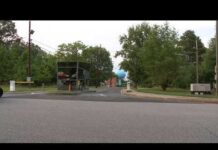
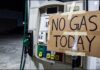
Madison kept an intersection barricaded for days after the Corey Ruiz shooting, with city trucks and around-the-clock staffing that critics say looks like taxpayer support for a protest zone.
Story Highlights
- City leaders stressed community care and safety while a homicide probe continued.
- A council member called for a “safe space for continued gathering and protest” at the site.
- Reports said the city did not try to reopen the street as a vigil and encampment grew.
- Events and nearby routines were disrupted as the closure persisted for days.
What Officials Did And Why It Matters
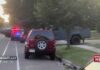
State investigators treated the shooting as an open homicide case. City leaders said their focus was safety, mental health support, and calm while the state reviewed evidence. A Wisconsin Public Radio report said the intersection would stay closed to cars “until further notice,” and described heavy vehicles forming a perimeter to keep people safe. That mix of safety language and visible barricades fueled a bigger fight over what city support should look like in tense moments.
Nearby residents and business owners faced blocked traffic, cancellations, and changing hours as the vigil stretched on. Protesters and mourners gathered at the site with candles, signs, and tents. Media reports described a days-long vigil that took hold in the middle of the street, which the city had not moved to reopen. For many locals, the closure felt like one more example of government making daily life harder, even while saying it aimed to help.
Where Support Ends And Endorsement Begins
A District 6 council member wrote that their top goal was to provide a “safe space for continued gathering and protest” in the area. Supporters read that as a practical way to prevent clashes and keep people from getting hurt. Skeptics saw it as the city leaning toward one side of a charged dispute. The same words can carry different meanings when combined with barricades, visible city equipment, and a closure that lasts for days.
Mayor Satya Rhodes-Conway spoke about community well-being and access to resources and mental health help. That messaging aligns with a crisis-response playbook during a state-led probe. But the longer a closure lasts, the easier it is for people to see it as the city enabling an encampment. The line between neutral crowd management and tacit support gets blurry, and trust erodes when leaders do not spell out the plan, timeline, and costs.
The Costs And The Questions Taxpayers Are Asking
Local coverage tied the closure to event disruptions, including a major concert cancellation downtown, as protesters moved between the site and the Capitol area. Residents across the political spectrum ask the same thing in moments like this: who pays, how much, and for how long. The public record in these reports did not include overtime logs, closure orders, or a schedule for reopening, so the size of the bill and the criteria for lifting the barricades remain unclear.
A police shooting in Wisconsin’s progressive capital city this week put the spotlight on persistent and deep racial divisions, prompting cancellations and other changes to popular summertime events as protesters said they were determined to continue public pressure for change in…
— WTOP (@WTOP) July 25, 2026
That gap feeds a familiar worry that government makes opaque choices and then sends the invoice to everyone else. Conservatives see mission creep and unequal rule enforcement. Liberals see disruption falling hardest on workers and small shops. Both sides see a system that rarely delivers clarity. When a city “has not tried to reopen the street,” and leaders highlight “safe space” for protest, it can look like the government picked a side without saying so.
What Accountability Would Look Like Now
Clear steps can lower the temperature without taking sides. City Hall can publish the closure order, spell out the safety reasons, and set review checkpoints. Police, transportation, and public works can release overtime totals and staffing levels linked to the barricades once operationally safe to do so. Leaders can define the triggers for reopening, such as crowd size and risk conditions, and explain them in plain language. These steps do not judge the protest. They respect the public’s right to know.
Across the country, high-profile police shootings draw vigils, marches, and tense scenes at the site. Cities often close streets, stage heavy vehicles, and provide services to avoid injuries. That pattern is visible in Madison now. The core test is whether officials can prove they managed safety evenly and spent money wisely while the Wisconsin investigation runs its course. Sunlight, not spin, is how they show it.
Sources:
youtube.com, reuters.com, pbs.org, police1.com
© rightwardpress.com 2026. All rights reserved.