A Chinese pastor says he went from planning for prison to boarding a flight to America after President Trump personally pressed China’s leader to let him go.
Story Snapshot
- Chinese underground church pastor Ezra Jin was suddenly freed and flown to the United States after months in detention.
- Multiple reports say President Trump raised Jin’s case directly with Xi Jinping, and the release followed within weeks.
- Jin’s family publicly thanked Trump and said they believe the release “could not have happened without Xi’s direct intervention.”
- The case shows how quiet deals between powerful leaders can decide one person’s fate while many others remain trapped.
A Pastor Vanishes in China’s Crackdown on Faith
Pastor Ezra Jin Mingri led Zion Church, one of China’s biggest underground Protestant churches, which refused to register with the government and often spoke out about religious freedom. In October 2025, Chinese officials detained Jin and other Zion Church leaders in what rights groups call one of the largest crackdowns on a single church in decades. He was later accused of “illegally using information networks” for streaming sermons online, a charge often used to control speech. For months, his family and supporters feared he would face a show trial and years in prison.
Jin’s case drew attention from religious freedom advocates and members of Congress who saw it as another example of the Chinese Communist Party tightening its grip on independent faith groups. These groups say China’s leaders see large, unregistered churches as a threat because they bring people together outside state control and speak to moral authority beyond the party. For Americans on both the right and the left, this fits a familiar pattern: authoritarian governments punishing people whose beliefs challenge the ruling elite, while ordinary worshippers pay the price.
Trump Raises the Case, Then the Cell Door Opens
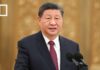
In May 2026, President Trump visited Beijing and, according to several outlets, personally brought up Jin’s detention in his meeting with Xi Jinping. Reporters say Trump told Xi the pastor’s case mattered and later told journalists on Air Force One that Xi would “strongly consider” or give “very serious consideration” to releasing Jin. Less than two months later, around July 3, Chinese officials abruptly told Jin he was being freed, dropped the charges, and put him on a plane bound for the United States.
Jin says authorities released him without forcing a confession and without staging a show trial, which is unusual in such high-profile cases. He describes the moment as a “miracle,” going from fear of prison to sudden freedom and fireworks as he landed near Washington, D.C. His family issued a statement saying the release happened “very quickly,” thanking President Trump and insisting it “could not have happened without Xi’s direct intervention.” The BBC and other outlets call Jin’s case an “exceptional” example of a Chinese detainee going free after a direct United States request.
What We Know—and What We Still Do Not
Jin and his advocates credit Trump’s “unique diplomacy” for changing his fate, and Bloomberg and ChinaAid describe the release as a goodwill gesture timed around America’s Independence Day. The Wall Street Journal and The New York Times both frame it as a concession from Beijing after United States pressure, noting that Jin arrived in Los Angeles the same holiday weekend. Some reports even say Chinese officials told Jin his freedom “resulted from discussions between Trump and Xi,” suggesting a leader-to-leader decision rather than a normal court ruling.
Still, the public record is thin on hard proof of what happened behind closed doors. China has not given a clear legal reason for dropping the case, and its foreign ministry only repeated that it manages religion “in accordance with the law,” without mentioning Trump or Xi’s talks. Jin himself says he does not know whether there was any “deal or swap” tied to his release. The White House has not published a full readout describing exactly what Trump asked for or what, if anything, the United States offered in return. That silence leaves room for supporters to see strong leadership, and for skeptics to wonder what was traded—and what we are not being told.
One Man Freed, Many Still Trapped
While Jin is now living near Washington and speaking freely about his faith, eight other Zion Church leaders reportedly remain detained in China. Jin has written and spoken about his deep concern for those still locked up, warning that his freedom does not mean the crackdown is over. Rights groups say China continues to pressure Christians, Muslims, and other religious communities, using high-tech surveillance and vague laws to control worship and speech. This raises a hard question: why did one pastor get out, while so many others stay behind bars?
Chinese Pastor Ezra JIN, Mingri was released in early July 2026 and arrived in Los Angeles on 5 July 2026 to reunite with his family, thanks to President Trump who personally intervened. Chinese authorities presented his release as a goodwill gesture coinciding with America’s… pic.twitter.com/2LDEAx1Klr
— Taotao🇦🇺 (@magataotao) July 23, 2026
For many Americans, this story hits a nerve that crosses party lines. People see a powerful government deciding who walks free and who disappears, based not on clear law, but on secret talks between political elites. Supporters of Trump may point to Jin’s case as proof that direct, personal pressure can work when dealing with China. Critics may worry that freedom for one man could be part of a bigger bargain we do not see, and that it still leaves a system where ordinary believers have almost no voice.
Sources:
youtube.com, thehill.com, npr.org, bloomberg.com, nytimes.com, fox59.com, firstpost.com, washingtontimes.com
© rightwardpress.com 2026. All rights reserved.