(RightwardPress) – Trump’s push to block states from passing their own AI laws has reignited the battle over who truly controls the nation’s future, Washington elites or the states defending American innovation and constitutional autonomy.
Story Snapshot
- President Trump demands a single federal standard on AI, warning state laws threaten U.S. competitiveness.
- Congressional Republicans push to attach a moratorium on state AI regulation to the NDAA; Democrats vow to block it.
- The tech industry supports federal preemption, seeking relief from conflicting state laws and regulatory chaos.
- Opponents argue federal overreach undermines state rights and tailored local protections, fueling intense political division.
Trump’s Call for a Unified AI Standard Sparks Fierce Federal-State Clash
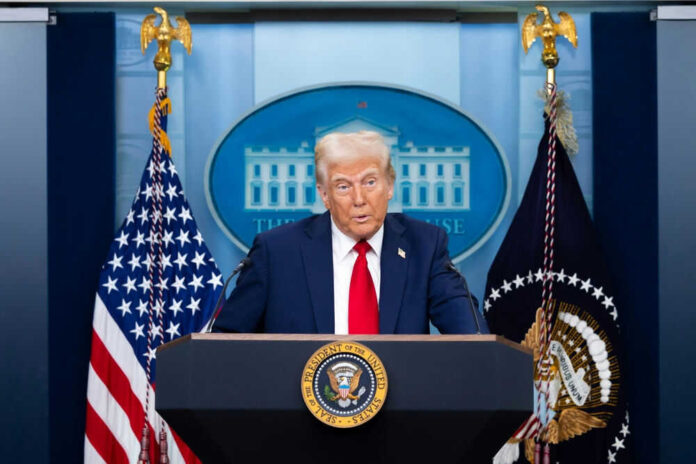
President Donald Trump has thrown his full weight behind a plan to prevent states from enacting their own artificial intelligence regulations, insisting that a patchwork of rules will cripple American innovation and hand an advantage to China. In November 2025, Trump called on Congress to pass a law establishing a single federal standard for AI oversight, making clear that the stakes are nothing less than the nation’s economic future and global standing.
House Republicans have responded by exploring every legislative option, including attaching a moratorium on state AI laws to the National Defense Authorization Act, a must-pass annual bill. Their proposal initially called for a ten-year ban on state-level AI regulation, later reduced to five years in the face of opposition. However, the Senate, facing bipartisan concern about federal overreach, rejected the measure during the summer, and Democrats have since vowed to block any renewed attempt to preempt state authority on AI.
Historical Context: The State vs. Federal Power Struggle
The United States has long grappled with the balance between federal oversight and state autonomy, especially when it comes to emerging technologies. In the absence of a clear federal framework, states have taken the lead in regulating AI, resulting in more than fifty sets of laws addressing issues from algorithmic transparency to consumer protection. This decentralized approach echoes earlier battles over internet privacy and environmental rules, with states stepping in where federal action lags.
Major technology companies and industry groups have lobbied hard for a unified federal standard, warning that complying with dozens of conflicting state laws will stifle innovation, raise costs, and ultimately harm American competitiveness. Trump’s intervention aligns with these concerns, but also taps into deep conservative worries about unchecked government power, regulatory bloat, and the erosion of constitutional principles when Washington centralizes authority.
High Stakes: Industry, State Rights, and American Values
Trump and GOP lawmakers argue the nation’s security and economic edge are at risk if the U.S. allows a “patchwork” of state laws to persist. They contend that only a unified standard will unleash innovation, attract investment, and prevent China from surpassing America in the AI race. Tech industry leaders echo these sentiments, citing the high compliance costs and operational headaches of navigating divergent regulations across states.
On the other side, Democrats and state officials warn that federal preemption would strip communities of their ability to protect consumers, children, and local interests. They argue that states are best positioned to respond to unique risks, such as algorithmic bias or data privacy, tailored to their populations. This argument resonates with those who believe the Constitution limits Washington’s reach and that robust state authority is a safeguard against government overreach, woke agendas, and one-size-fits-all mandates.
Unresolved Battle and What Comes Next
As of November 2025, no law blocking state AI rules has passed, leaving the country in regulatory limbo. The outcome will shape not only the future of AI, but also the broader question of whether power remains with states and the people, or is ceded to federal bureaucrats and industry lobbyists. For conservatives concerned about the erosion of constitutional checks, government overreach, and the stifling of American ingenuity, this fight is about far more than technology, it’s about defending the very principles that set the nation apart.
The debate remains fierce, with both sides claiming to protect American values. But as President Trump and his supporters push for a federal solution, the question persists: will this move safeguard the nation’s future, or further concentrate power at the expense of state sovereignty and individual liberty?
Copyright 2025, Rightwardpress.com